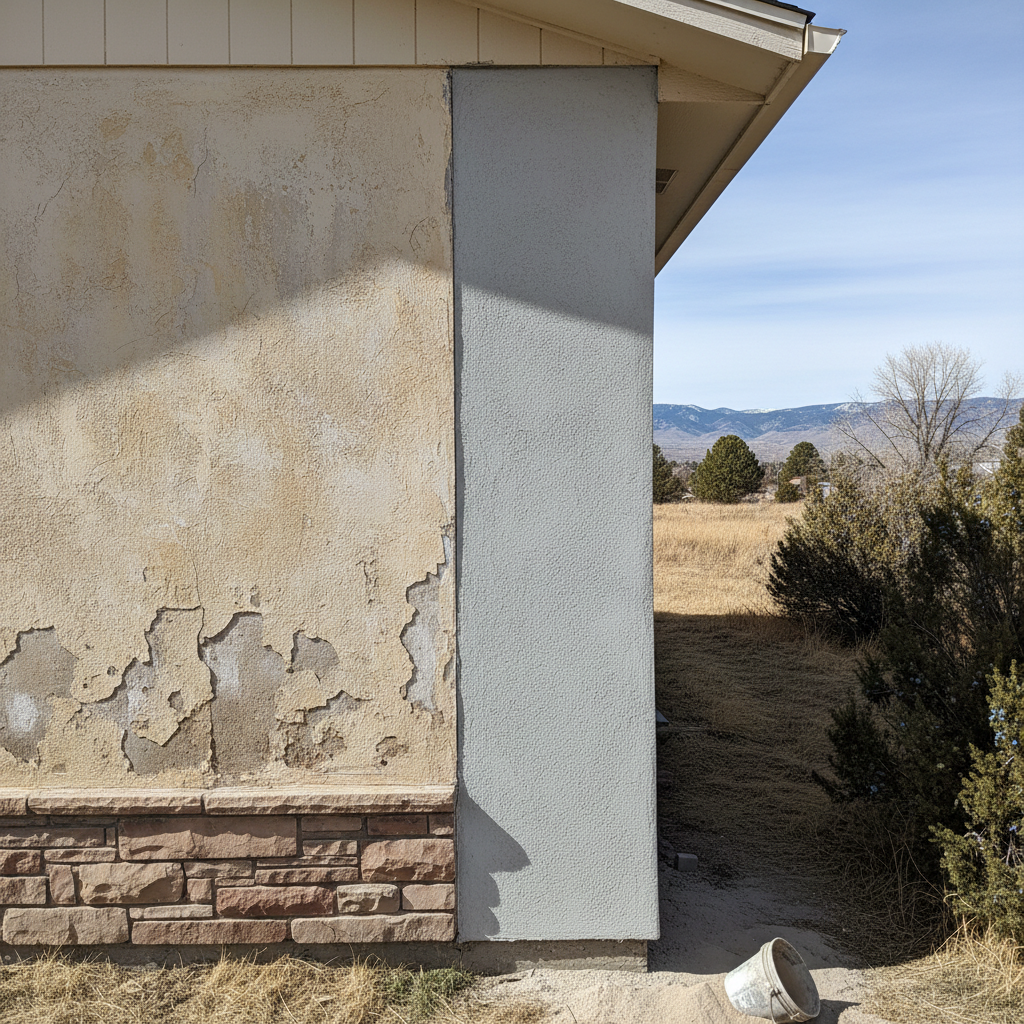
Alright, so you've got some stucco damage on your house here in Layton. Maybe it's a crack, a chip, or a bigger section that's just seen better days. The big question I hear from homeowners all the time is, "Can I just patch this, or do I need to go all out and resurface?" It's a fair question, and honestly, there's no one-size-fits-all answer. It really depends on what kind of shape your stucco is in and what you're hoping to achieve. Let's talk through the two main approaches: patching and resurfacing.
Patching Stucco: The Quick Fix
Patching is exactly what it sounds like. You're fixing specific, isolated areas of damage. Think of it like putting a band-aid on a cut. If you've got a few hairline cracks, a small hole from a misplaced ladder, or a section where the stucco chipped off after a rogue baseball hit it, patching can be a perfectly good solution.
When Patching Makes Sense:
- Minor, isolated damage: We're talking about cracks that aren't structural, small impact damage, or areas where the finish coat has flaked off in a limited spot.
- Budget-conscious: It's almost always cheaper upfront than resurfacing because you're only paying for materials and labor for a small area.
- Good overall condition: If 90% of your stucco looks great and just a few spots are problematic, patching is the way to go. You don't want to redo a whole wall for one little ding.
The Downsides of Patching:
- Matching can be tricky: This is the biggest hurdle, especially with older stucco. The color and texture of new stucco rarely match the faded, weathered existing stucco perfectly. You can try to match it, but often, you'll see the patch. It's like trying to match paint on a wall that's been exposed to the sun for 15 years – it's tough.
- Limited durability: A patch fixes the symptom, not necessarily the underlying cause. If your stucco is cracking because of foundational movement or water intrusion, a patch won't stop new cracks from forming nearby.
- Aesthetic compromise: If you're a perfectionist, those visible patches might bother you. They can make your home look a bit piecemeal, especially if you have a lot of them.
Resurfacing Stucco: The Fresh Start
Resurfacing is a more comprehensive approach. Instead of just fixing the bad spots, you're essentially putting a brand-new top layer over the entire existing stucco system. We'll repair any underlying damage first, of course, but then we apply a new finish coat across the whole wall or even the entire house.
When Resurfacing is Your Best Bet:
- Widespread damage: If your stucco has cracks all over the place, extensive discoloration, or multiple areas of delamination (where it's separating from the wall), patching becomes a never-ending game of whack-a-mole.
- Outdated appearance: Maybe your stucco is just looking old and tired, or you want to change the color or texture entirely. Resurfacing gives your home a complete facelift.
- Water intrusion concerns: If you're dealing with consistent moisture issues or your stucco is just too old to reliably keep water out, a full resurface, especially with modern synthetic stucco systems, can offer superior protection. Here in Layton, with our freeze-thaw cycles and occasional heavy snow, that water protection is critical.
- Seeking uniformity: If you want your stucco to look brand new and perfectly consistent, resurfacing is the only way to achieve it. No visible patches, just a smooth, even finish.
The Downsides of Resurfacing:
- Higher upfront cost: There's no getting around it; resurfacing is a bigger investment than patching. You're covering more area and using more materials and labor.
- More extensive project: It takes longer, involves more prep work, and can be a bit more disruptive to your daily life during the process.
So, Which One Should You Choose for Your Layton Home?
Here's my honest take. If you've got a couple of small, isolated issues and the rest of your stucco is in good shape and you're okay with a potential color or texture difference, go with patching. It'll save you money and get the job done.
However, if your stucco is showing its age, has cracks popping up everywhere, looks faded and tired, or you're just ready for a fresh look, resurfacing is almost always the better long-term solution. It's an investment, yes, but it gives you a uniform, durable, and beautiful finish that will protect your home for years to come. Think about the neighborhoods around the Layton Hills Mall, where you see a lot of homes from the 80s and 90s. Their stucco might not be failing everywhere, but it's often looking pretty dated. That's a perfect candidate for a full resurface.
At Western Stucco Solutions, we always start by taking a look at your specific situation. We'll give you an honest assessment of what we think is best for your home, your budget, and your goals. Sometimes a few well-done patches are all you need. Other times, a full resurface is going to give you the best bang for your buck and prevent future headaches. Don't hesitate to give us a call, and we can walk you through your options.